AI Copyright Risks and How to Avoid Them
We use affiliate links. If you purchase something using one of these links, we may receive compensation or commission.
Introduction
If you’re creating content with AI tools, ai copyright is something you can’t ignore. Even if AI feels like a shortcut for writing, images, or ideas, the legal rules around ownership and originality still matter. This quick guide explains the real risks and how to keep your blog safe.
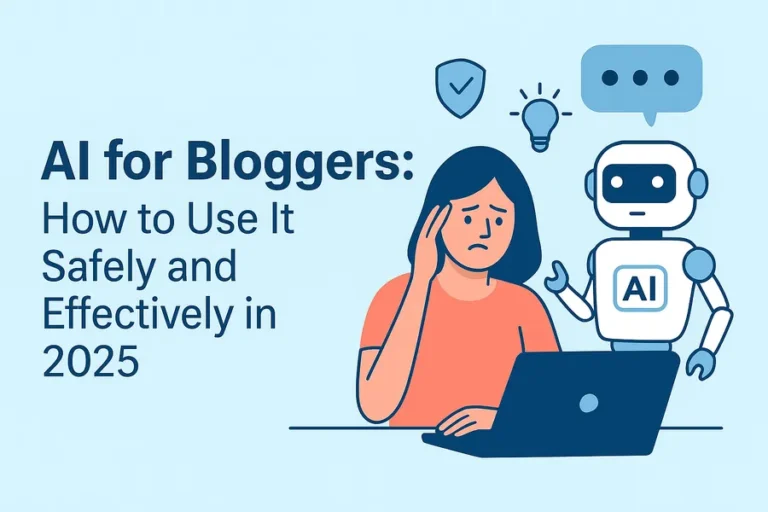
If you want a broader overview of using AI safely, you can also read my full guide on AI for bloggers, which covers practical tools and safe workflows.
What AI Copyright Really Means
AI tools generate text and images, but they don’t own copyright. Humans do. The trouble starts when AI outputs are too similar to copyrighted material or when bloggers assume AI content is automatically “free to use.” Understanding ai copyright basics helps you avoid accidental infringement.
For a more detailed explanation from an official source, the U.S. Copyright Office offers a helpful overview of how AI-generated works are treated under current law.
Common AI Copyright Risks for Bloggers
Here are the problems most bloggers run into:
- Accidentally publishing text that resembles a copyrighted source
- Using AI-made images that match real photos or artwork
- Misunderstanding who owns the output of an AI tool
- Forgetting to check rights for datasets used by image models
Nothing here is meant to scare you — it’s just the new normal for working with AI.
These risks highlight why every creator should understand safe AI workflows. My main AI for bloggers guide explains how to use these tools responsibly in all types of content.
How to Stay Safe With AI-Generated Text
AI is great for drafts, outlines, and rewrites, but you should always add your own edits. Keep these habits:
- Rewrite AI output in your own voice
- Fact-check claims, dates, and quotes
- Run a plagiarism check when publishing important posts
- Attribute sources when mentioning real studies or statistics
Most ai copyright issues come from unedited AI text, not original writing.
AI Copyright and Image Generation Tools
Images are where bloggers get into trouble the fastest. Some AI models can recreate styles or very close copies of existing artwork. To avoid problems:
- Ask for original or non-derivative styles when prompting
- Avoid prompts referencing active trademarks or specific artists
- Check each tool’s license (some allow commercial use, some don’t)
- Always keep a record of your generated images (date, prompt, model)
Best Practices for AI Copyright Compliance
Follow these simple rules and you’ll stay on the safe side:
- Treat AI output as a draft, not a final product.
- Edit heavily—your voice gives you originality.
- Verify the licensing policies of every AI tool you use.
- Keep screenshots of prompts and outputs for documentation.
- Use AI ethically—avoid recreating protected text, characters, or artworks.
These steps are enough for most bloggers to protect themselves.
When You Should Get Professional Help
If your blog is growing or you’re publishing high-value guides, consider legal advice when:
- You publish AI-generated images in commercial products
- You rewrite copyrighted text for ebooks or online courses
- You repurpose long quotes or recognizable characters
Most bloggers won’t need this, but it’s good to know when the line appears.
Final Thoughts
Navigating ai copyright isn’t complicated once you know the basics. Use AI as a creative assistant, add your voice, follow the licensing rules, and document your work. A little caution now can save you from bigger headaches later—and keeps your whole blogging workflow safer.
If you want to learn how to use AI tools more effectively across your entire blogging process, check out my full AI for bloggers guide.